

Short answer
After a car accident in Lancaster, stop and check for injuries, and call 911 if anyone is hurt. If no one is hurt and the cars can move, get out of traffic, then exchange license, registration, insurance and address details and take photos. Crashes on CA-14 go to CHP Antelope Valley, even inside city limits; city-street crashes go to the Lancaster Sheriff's Station. File a DMV SR-1 within 10 days if anyone was hurt or damage is over $1,000.
If anyone is hurt, call 911 first
Call 911 if anyone is injured, if there is smoke or fire, or if a car is stuck in a traffic lane where it could be hit again. Everything else on this page can wait until help is on the way.
What should you do right after a crash?
Work through these in order. The legal duties behind each step are summarized further down.
- Stop. Driving away from a crash is a crime in California, whether or not anyone was hurt and whoever caused it.
- Check for injuries. Call 911 if anyone is hurt. The law also requires you to give reasonable help to anyone injured, including arranging a ride to a doctor or hospital when treatment is clearly needed or the injured person asks.
- Get out of traffic if no one is hurt. If the cars can be driven, move them to the nearest spot that does not block traffic: the shoulder, an off-ramp, a side street or a parking lot. Moving does not decide who was at fault.
- Make yourself visible. Turn on your hazard lights. On CA-14, stay well away from moving traffic while you wait. The Highway 14 breakdown guide covers shoulder safety in detail.
- Exchange information with every other driver: driver’s license, vehicle registration, insurance and address. Write down plate numbers and each vehicle’s make, model and color.
- Take photos and notes. Photograph every vehicle, the damage and the plates. Note the road, the nearest cross street or CA-14 exit, your direction of travel and the time. Get names and phone numbers of witnesses.
- Report it to the right agency. The table below shows which one.
- Deal with the tow if your car cannot be driven safely. The tow section below covers your rights.
If you hit a parked car, a fence or other property and cannot find the owner, leave a note in a visible place with your name, address and what happened, then report the crash without unnecessary delay.
Who handles a crash on which road?
It depends on where the crash happened, not where you live. Two rules settle most cases:
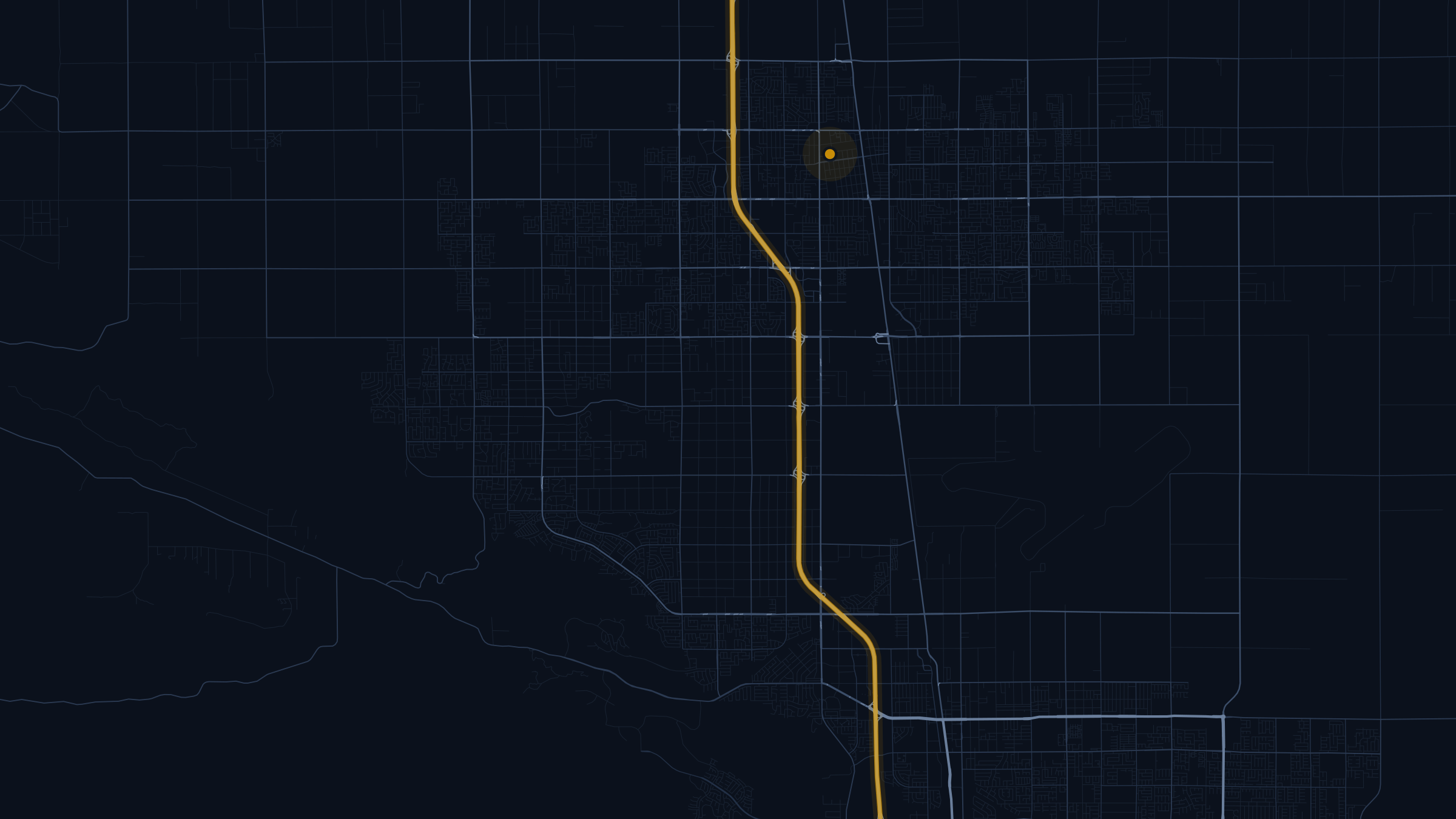
- Freeways belong to CHP. Vehicle Code 2400 gives the California Highway Patrol primary jurisdiction over crashes on state highways built as freeways, including the parts inside city limits. Every crash on CA-14 (the Antelope Valley Freeway) is a CHP crash.
- City streets belong to the Sheriff. Lancaster and Palmdale contract with the Los Angeles County Sheriff’s Department for police service. The City of Lancaster names the Lancaster Sheriff’s Station as the traffic law enforcement agency inside city limits.
| Where the crash happened | Who handles it | Office phone |
|---|---|---|
| CA-14, including inside Lancaster and Palmdale | CHP Antelope Valley Area | (661) 743-6060 |
| Lancaster city streets, such as Avenue J or 10th Street West | LASD Lancaster Station | (661) 948-8466 |
| SR-138 outside city limits, and county roads in places like Quartz Hill, Antelope Acres, Lake Los Angeles and Littlerock | CHP Antelope Valley Area | (661) 743-6060 |
| Palmdale city streets | LASD Palmdale Station | (661) 272-2400 |
| Rosamond and the rest of Kern County | CHP Mojave Area for traffic, (661) 823-5500; Kern County Sheriff’s Office | Kern Sheriff non-emergency: (661) 861-3110 |
Phone numbers are the agencies’ own listings, checked October 2026. For an emergency, call 911 instead.
The CHP Antelope Valley Area covers about 30 miles of SR-14 from Acton to the Kern County line and about 1,400 miles of unincorporated roads, including SR-138 and Angeles Forest Highway. Its office is at 2041 W Avenue I in Lancaster.
Rosamond is across the county line in Kern County, so Los Angeles County agencies do not handle crashes there. CHP’s Mojave Area lists Rosamond among the communities it serves. In Palmdale, city streets go to the Palmdale Sheriff’s Station, while CA-14 through Palmdale is still CHP.
What does California law require after a crash?
These are plain-language summaries. Follow the links for the full text, and talk to a lawyer if your situation is unusual.
| If the crash | The law requires | Statute |
|---|---|---|
| Injured or killed anyone | Stop at the scene. Give your name, address, plate number and the owner’s name and address to the other people involved and to any officer. Show your license if asked. Give reasonable help to anyone hurt. | VC 20001, VC 20003 |
| Killed anyone and no officer is there | Report it without delay to the nearest CHP or police office | VC 20004 |
| Injured or killed anyone | Make, or have someone make, a written report to CHP, or inside a city to CHP or the city’s police, no later than 24 hours after the crash | VC 20008 |
| Only damaged vehicles or property | Stop at the nearest location that does not block traffic. Find the owner and exchange details, or leave a written note and report it to the city police, or to CHP in an unincorporated area | VC 20002 |
| Injured or killed anyone, or caused over $1,000 in property damage | File an SR-1 report with the DMV within 10 days | VC 16000 |
In Lancaster and Palmdale, “the city’s police” means the Sheriff’s station that serves the city under contract.
Do you need to file an SR-1 with the DMV?
Yes, if anyone was injured (however slightly) or killed, or if property damage was over $1,000. The DMV’s accident reporting page and Driver Handbook set out the rules:
- File within 10 days of the crash.
- Each driver files, whoever was at fault. That includes crashes on private property, such as a parking lot.
- You, or your insurance agent, broker or legal representative, can file it. Law enforcement does not file it for you.
- It is in addition to any police, CHP or insurance report.
- You can file it online. Paper takes longer.
- Not filing can lead to suspension of your driving privilege.
What about the tow?
If your car cannot be driven safely, the tow is the next decision, and California law gives you a say in it.
You can ask for your own tow company
When CHP handles the scene, its own policy manual tells officers to honor a driver’s or owner’s request for a specific tow company or motor club. The exceptions: when that is impractical, for example when the car is blocking a freeway off-ramp, or when the vehicle is being stored or impounded under the law. If you have no preference, the officer calls a tow from CHP’s rotation list.
On a Lancaster or Palmdale city street, ask the deputy whether you can call your own tow. If you have roadside coverage through an insurer or motor club, call them now; they may cover the tow.
Be wary of a tow truck you did not call
Under Vehicle Code 22513, a tow operator may not solicit work at a crash or a disabled vehicle unless law enforcement or a public agency asked for the tow, or the owner or driver called it or asked it to stop. Ask who sent the truck. If nobody did, you do not have to hire it.
Get a written estimate, and read it before you sign
When you or the driver call a tow company to a crash, the same law requires the operator to give you a written, itemized estimate of all charges before hooking up, if you are there. It must show:
- the company’s name, address, phone number and motor carrier permit number
- the tow truck’s license plate and the operator’s full name
- a price for each service: labor, special equipment, mileage from dispatch to return, and storage as a 24-hour rate
You sign it and get a copy, and the company cannot charge for anything beyond the estimate without your consent. Tows dispatched by a motor club, and tows done under a law enforcement contract, are exempt from the estimate rule. Do not sign anything you do not understand or anything with blank price lines. Ask first.
Car can't be driven after a crash in the Antelope Valley?
Call for towing help (661) 555-0123Take your belongings first
If it is safe, take what you need before the car leaves: registration and insurance papers, your phone, wallet, house keys, garage opener, medicine and child seats. If you forget something, Vehicle Code 22651.07 gives you the right to collect personal property from the storage yard at no charge during normal business hours, Monday to Friday, 8 a.m. to 5 p.m., except state holidays.
Decide where the car goes
Give the driver a full address: your home, a body shop, or the shop your insurer prefers. If an officer ordered the tow, the car usually goes to the tow company’s storage yard, and storage is charged by the day. The impound and release guide explains how to get it out.
A crash-damaged car, or one with a wheel that will not turn, normally rides on a flatbed. A car that ended up off the road, in a ditch or in soft sand needs accident recovery before it can be towed.
Know which fees the law limits
Vehicle Code 22524.5 says towing and storage fees after an accident must be reasonable. Fees no higher than what CHP or local police pay for similar service are deemed reasonable. Unless a law enforcement towing agreement sets them, these are presumed unreasonable:
- administrative or filing fees, except DMV paperwork and lien-sale fees
- security, dolly, load-and-unload and pull-out fees
- gate fees, unless you or your insurer ask for a release outside business hours
- storage above half the daily rate when the car is picked up in the first four hours
- storage for any day the yard fails to release the car after you asked and paid
The same law makes an insurer that covers towing and storage liable for the reasonable charges. California’s minimum liability insurance is $30,000 for injury or death to one person, $60,000 for injury or death to more than one person, and $15,000 for property damage. For what goes into a tow price, see how much a tow costs in Lancaster.
More questions
Who takes the report for a crash on the 14 in Lancaster?
The California Highway Patrol. Vehicle Code 2400 gives CHP primary jurisdiction over crashes on state freeways, including the stretch of CA-14 inside Lancaster city limits. The CHP Antelope Valley Area office is at 2041 W Avenue I, (661) 743-6060.
Do I still have to file an SR-1 if the police or CHP made a report?
Yes. The DMV says the SR-1 is separate from any police, CHP or insurance report, and officers do not file it for you. Each driver files it within 10 days if anyone was hurt or killed or property damage was over $1,000, whoever was at fault.
Can I choose my own tow company after an accident?
When CHP handles the crash, its policy is to honor your request for a specific tow company or motor club unless that is impractical, for example when the car blocks a freeway off-ramp, or the vehicle is being stored or impounded under the law. On a city street, ask the deputy at the scene.
A tow truck showed up at my accident before anyone called one. Should I let it take my car?
Ask who sent it. Under Vehicle Code 22513, a tow operator may not solicit work at a crash unless law enforcement or a public agency asked for it, or you or the driver called it or asked it to stop. If you do hire it, you are entitled to a signed, itemized written estimate before it hooks up.
Will my insurance pay for the tow and storage after a crash?
If your policy covers towing and storage, Vehicle Code 22524.5 makes the insurer liable for the reasonable charges. It can pay the tow company directly or pay you, and if it pays you, you owe that money to the tow company. Check your policy and call your insurer early, before storage days add up.
Sources and official resources
- California DMV Driver Handbook: Financial responsibility, insurance requirements and collisions
- California DMV: Accident reporting (SR-1)
- California Vehicle Code 2400: CHP jurisdiction on freeways
- California Vehicle Code 16000: accident report to the DMV
- California Vehicle Code 20001: duty to stop in an injury or fatal crash
- California Vehicle Code 20002: duty in a property-damage crash
- California Vehicle Code 20003: information and help for the injured
- California Vehicle Code 20004: reporting a death
- California Vehicle Code 20008: written report of an injury crash
- California Vehicle Code 22513: tow solicitation and written estimates
- California Vehicle Code 22524.5: towing and storage fees after an accident
- California Vehicle Code 22651.07: itemized invoice and owner's rights
- CHP Highway Patrol Manual 81.2, chapter 7: towing (owner's choice of tow company)
- CHP Antelope Valley Area (545)
- CHP Mojave Area (830)
- LASD Lancaster Station
- LASD Palmdale Station
- Kern County Sheriff's Office: Rosamond Substation
- City of Lancaster: Parking Enforcement (towed and impounded vehicles)
- City of Lancaster: About the L.A. County Sheriff's Department